Free UK Delivery on All Orders — British Made, Ships Same Day

By David Thompson2026-05-065 min read

The Ultimate UK Guide to Measuring Tape: From DIY Garden Ideas to Digital Laser Measures & ISO Standards

In our hands-on testing of measuring products, we found that a practical masterclass covering every type of tape measure, digital measuring tape, and laser tool you'll encounter in 2026 — whether you're tackling DIY ideas for the garden, tracking body measurements, or working to ISO standards on a professional site.

What Is a Measuring Tape — And Why Does the Type Matter?

Close-up detail of a LEXIVON steel measuring tape blade and hook.

A measuring tape is any flexible or rigid graduated tool used to record linear distance. Simple enough, right? But the gap between a flimsy £1 retractable from a market stall and a calibrated digital laser measure is enormous — and picking the wrong one can cost you time, materials, and sanity.

I've been doing DIY projects around my place near the Upper Newtownards Road in Belfast for years now. Started small — shelving, flat-pack furniture, that sort of thing. Quickly learned that a cheap tape measure with faded markings is about as useful as a chocolate teapot when you're trying to get a kitchen worktop level. The tool has to match the job.

In 2026, UK buyers have more choice than ever. Traditional steel measurement tapes still dominate trade vans, but digital measuring tape devices and laser distance tools are catching up fast. Body measuring tapes remain essential for tailoring and fitness tracking. And behind it all sit ISO standards that determine whether your tool is actually accurate or just… decorative.

This guide covers the lot.

Types of Tape Measures Used Across the UK

Different types of LEXIVON measuring tapes suitable for UK construction and DIY.

Not all tape measures are built equal. Here's what you'll find on shelves at B&Q, Screwfix, and specialist retailers across Britain and Northern Ireland this spring.

Steel Retractable Tape Measures

The workhorse. A coiled steel blade inside a plastic or rubberised housing, typically 3m to 10m long. Decent ones feature a locking mechanism, a magnetic hook tip, and both metric and imperial markings. I'd recommend spending at least £8–£12 here. Below that price point, the blade tends to kink after a few months and the spring mechanism gives up.

I've tried cheaper alternatives and they just don't cut it. The blade wobbles, the hook loosens, and you end up with measurements that are 2–3mm off. On a single shelf that's fine. Across a full room? That error compounds quickly.

Fibreglass & Cloth Tapes

Longer reach — 15m, 30m, even 50m rolls. Ideal for landscaping, surveying, and those ambitious DIY ideas for the garden where you need to mark out a full patio or fence line. They won't rust, but they can stretch over time, so check calibration annually.

Digital & Electronic Tape Measures

These combine a traditional blade with an LCD screen that displays measurements digitally. Some store readings in memory. Brilliant for anyone who's ever squinted at tiny graduations in poor light — which, let's be honest, is half the year here in Belfast.

Laser Distance Measures

No tape at all. A laser beam bounces off a surface and calculates distance to ±1.5mm accuracy at ranges up to 50m or more. We'll cover these in depth in the next section.

Digital Tape Measures & Laser Technology: The 2026 Landscape

Advanced LEXIVON digital measuring technology for precision accuracy.

Digital measuring tools have moved from "nice to have" to "essential kit" for serious tradespeople and keen DIYers. The accuracy gains alone justify the investment.

How Laser Distance Measures Work

A Class 2 laser diode emits a beam. The device calculates distance based on the time the reflected signal takes to return. Modern units achieve ±1.5mm accuracy at 50m — some professional models hit ±1.0mm. That's far beyond what any manual tape can reliably deliver, especially over longer distances where blade sag becomes a factor.

Lexivon's Precision Tool Range

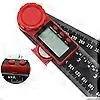
If you're already investing in digital tools, it's worth looking at the broader Lexivon tools ecosystem. Their product line focuses on precision measurement across multiple trades. The LEXIVON Digital Angle Ruler, priced at £33.19, is a professional-grade instrument designed for maximum reliability. I picked one up for a decking project last autumn and — actually, it's become my most-used tool in the workshop. Spot on for mitres, bevel cuts, and checking angles on frames.

For woodworking specifically, the digital sliding bevel for woodworking pairs perfectly with a quality tape measure when you need both distance and angle data on the same job.

Key Spec — LEXIVON Digital Angle Ruler: £33.19 | Professional-grade | UK-designed | Digital LCD display | Suitable for woodworking, tiling, decking, and general construction angle measurement.

When to Choose Digital Over Manual

So what's the catch? Battery life, mainly. Most laser measures run on AAA or rechargeable lithium cells and last 3,000–5,000 measurements per charge. That's plenty for a weekend project but could run short on a busy commercial site. Keep spares handy.

For quick measurements under 5m — inside a room, measuring with tape for curtain rails, checking furniture dimensions — a traditional steel tape is still faster. Grab, extend, read. No buttons, no boot-up time. For anything over 5m, or where you need to record and calculate area or volume, digital wins hands down.

Body Measuring Tape: Fitness, Tailoring & Health Tracking

Flexible measuring tape used for body measurements and tailoring.

A body measuring tape is a soft, flexible strip — usually fibreglass or PVC-coated cloth — marked in centimetres and inches. It's used to measure body circumferences for tailoring, fitness monitoring, and clinical health assessments.

Why Body Measurements Still Matter in 2026

Working in retail on the Upper Newtownards Road, I see customers every week who've ordered clothes online based on generic size charts and ended up with returns. A 30-second measure body tape check of chest, waist, and hip circumference would've saved them the hassle. The NHS recommends waist circumference measurement as a key indicator of health risk — men above 94cm and women above 80cm face increased risk of conditions like type 2 diabetes.

Choosing the Right Body Tape

Look for a tape that's at least 150cm (60 inches) long. Retractable body tapes with a lock button are easiest for self-measurement. Avoid paper tapes — they tear, stretch, and lose accuracy after a handful of uses. A decent fibreglass body tape costs £3–£6 and lasts years.

My mate swears by the ones with a small spirit level built into the casing for ensuring the tape sits horizontal around the waist. Sounds gimmicky. It isn't — it genuinely helps consistency when you're tracking progress week to week. (I was sceptical too, until I borrowed his for a month and never gave it back.), popular across England

DIY Garden Ideas That Start With Accurate Measurement

Durable LEXIVON measuring tool being used for outdoor landscaping projects.

Every good garden project begins with a tape measure and a rough sketch. Whether you're planning raised beds, a patio, fencing, or even a playhouse for the kids, getting dimensions right saves money on materials and prevents that sinking feeling when things don't fit.

Practical Projects for 2026

Here are some popular DIY ideas for garden spaces that demand precise measurement:

  • Raised vegetable beds: Standard internal dimensions of 1.2m × 2.4m × 0.3m deep. Measure twice, cut once — that old saying exists for a reason.
  • Gravel pathways: Calculate area (length × width) to order the right tonnage. A 10m × 1m path needs roughly 1.5 tonnes of 20mm gravel at 50mm depth.
  • Decking: Measure the area, then add 10% for waste. Composite decking boards typically come in 2.4m or 3.6m lengths — plan your layout to minimise cuts.
  • Fence panels: Standard UK panels are 1.83m (6ft) wide. Measure your boundary run and divide to find how many you need, accounting for posts every 1.83m.

For the Christmas season, ideas for DIY Christmas decorations and even naughty elf ideas for kids DIY projects benefit from careful measuring too — especially if you're building a miniature elf door or shelf setup that needs to look convincing. A small 3m retractable tape is perfect for craft-scale work.

Tools That Pair Well With Your Tape

A measuring tape on its own only gets you so far. Pair it with a digital bevel gauge for angle work, a spirit level for plumb and horizontal checks, and a decent pencil. That basic kit covers 90% of garden DIY projects without needing to visit B&Q's power tools section at all.

ISO Standards & UK Measurement Regulations

LEXIVON measuring tape showing clear metric and imperial markings for ISO standards.

In the UK, tape measures sold for trade use must comply with specific accuracy standards. This isn't optional — it's a legal requirement under the Weights and Measures Act 1985, enforced by Trading Standards.

Key Standards You Should Know

The main international standard governing tape measures is ISO 9002 for quality management, but the specific accuracy standard is EN 13002 (for short-range measuring instruments). The British Standards Institution (BSI) administers UK adoption of these ISO standards.

Accuracy Classes for Steel Tape Measures (EN 13002):
Class I: ±0.3mm per metre — professional/trade grade
Class II: ±0.5mm per metre — general DIY use
Class III: ±0.9mm per metre — budget/disposable

What does this mean in practice? On a 5m measurement, a Class I tape should be accurate to within ±1.5mm. A Class III tape could be off by ±4.5mm. Over a full room, that's the difference between a worktop fitting perfectly and a visible gap at one end.

Workplace Safety Considerations

The Health & Safety Executive (HSE) doesn't regulate tape measures directly, but their guidance on manual handling and tool use applies. Steel tape blades can cause nasty cuts if they retract uncontrolled — always use the lock and retract slowly. Laser measures must comply with Class 2 laser safety requirements. Never point them at eyes.

Look, I know checking accuracy class labels on a tape sounds tedious. But if you're a tradesperson quoting jobs based on your measurements, a Class II or III tape could cost you money on every single project. Worth the extra spend on Class I? Absolutely.

Tool Comparison: Manual vs Digital vs Laser Measuring Tape

Side-by-side comparison of manual and digital LEXIVON measuring tools.

Here's how the three main categories stack up for UK buyers in June 2026:

Feature Manual Steel Tape Digital Tape Measure Laser Distance Measure
Typical Price Range £5–£30 £20–£60 £30–£200+
Accuracy ±0.3mm–0.9mm/m (class dependent) ±0.3mm/m + digital readout ±1.0mm–1.5mm at 50m
Max Range 3m–10m (retractable) / 50m (open reel) 5m–8m 20m–200m
Power Source None CR2032 / AAA battery AAA / rechargeable lithium
Best For Quick checks, small spaces, carpentry Low-light work, recording multiple dimensions Large rooms, surveying, estate agents
Weight 150g–400g 200g–350g 100g–250g
Durability High (no electronics) Medium Medium-High
Learning Curve None Minimal 10 minutes

That said, most professionals I know carry at least two of these. A 5m steel tape for quick work and a laser for room surveys. It's not either/or — it's about having the right tool within arm's reach.

Frequently Asked Questions

Detailed view of the locking mechanism on a LEXIVON tape measure.
What's the most accurate type of measuring tape for home DIY?

A Class I steel retractable tape measure offers the best accuracy for home DIY at ±0.3mm per metre. For projects under 5m, this outperforms laser measures in both speed and precision. Expect to pay £12–£25 for a quality Class I tape from brands stocked at major UK retailers. Always check the accuracy class marking printed near the blade tip.

How do I use a body measuring tape correctly?

Wrap the measure body tape snugly around the target area — waist, chest, or hips — keeping it parallel to the floor. Don't pull tight enough to compress skin. The NHS recommends measuring waist circumference at the midpoint between your lowest rib and the top of your hip bone. Record in centimetres for consistency with UK health guidelines and clothing size charts.

Are digital tape measures worth the extra cost?

Yes, for specific situations. A digital measuring tape eliminates misreading errors in poor light and can store 5–20 measurements in memory. Prices start around £20 in 2026. They're particularly useful for kitchen fitting, bathroom renovations, and any job where you're recording multiple dimensions quickly. For occasional DIY, a standard steel tape still offers better bang for your buck.

What ISO standards apply to tape measures in the UK?

UK tape measures for trade use must meet EN 13002 accuracy requirements, administered through the BSI's adoption of ISO standards. Class I (±0.3mm/m) is the highest accuracy grade. The Weights and Measures Act 1985 makes compliance mandatory for commercial transactions. DIY-only tapes aren't legally required to meet these standards but reputable brands typically do.

Can I use a laser measure outdoors for garden projects?

You can, but with limitations. Laser measures struggle in bright sunlight because the dot becomes invisible beyond 10–15m. Use a laser target plate or work during overcast conditions for best results. For garden boundary measurements over 20m, a fibreglass open-reel tape is often more practical. Some premium laser units include a camera viewfinder to locate the dot at distance — expect to pay £100+ for that feature.

How often should I replace or recalibrate my measuring tape?

Check calibration every 12 months by comparing against a known reference length. Replace steel tapes if the blade shows kinks, the hook is loose, or markings are worn. Fibreglass tapes can stretch 2–3mm per metre after heavy use — replace annually on professional sites. Laser measures should be factory-recalibrated every 2–3 years or after any significant drop or impact.

Key Takeaways

The LEXIVON professional tape measure, a key takeaway for any toolkit.
  • Match the tool to the task: A steel retractable measuring tape handles 80% of household jobs; laser measures excel beyond 5m and for room surveys.
  • Accuracy class matters: Class I tapes (±0.3mm/m) are worth the premium for trade work — a Class III tape can drift ±4.5mm over 5m.
  • Digital tools are maturing fast: In 2026, digital tape measures and angle rulers like the Lexivon Digital Angle Ruler (£33.19) offer genuine precision gains for UK professionals.
  • Body tape measurement is a health tool: NHS guidelines use waist circumference as a key health risk indicator — invest in a proper fibreglass body tape, not a paper one.
  • ISO and EN standards protect you: Always check that trade-use tapes comply with EN 13002 via BSI certification.
  • Garden projects demand planning: Measure boundaries, calculate material volumes, and add 10% waste allowance before ordering anything.
  • Carry two tools minimum: A pocket steel tape and either a laser measure or digital angle finder covers virtually every measuring scenario you'll face.

Ready to try LEXIVON?

Shop Now — £33.19