Hexagon Planter Mitre Angle Setting Uk
For a flat regular hexagon planter, set the saw to a 30° mitre on both ends of each side. That comes from bisecting the interior geometry of a six-sided frame (180° ÷ 6). Splayed or tapered walls need different compound maths — treat those as a separate project.
Weekend schedule
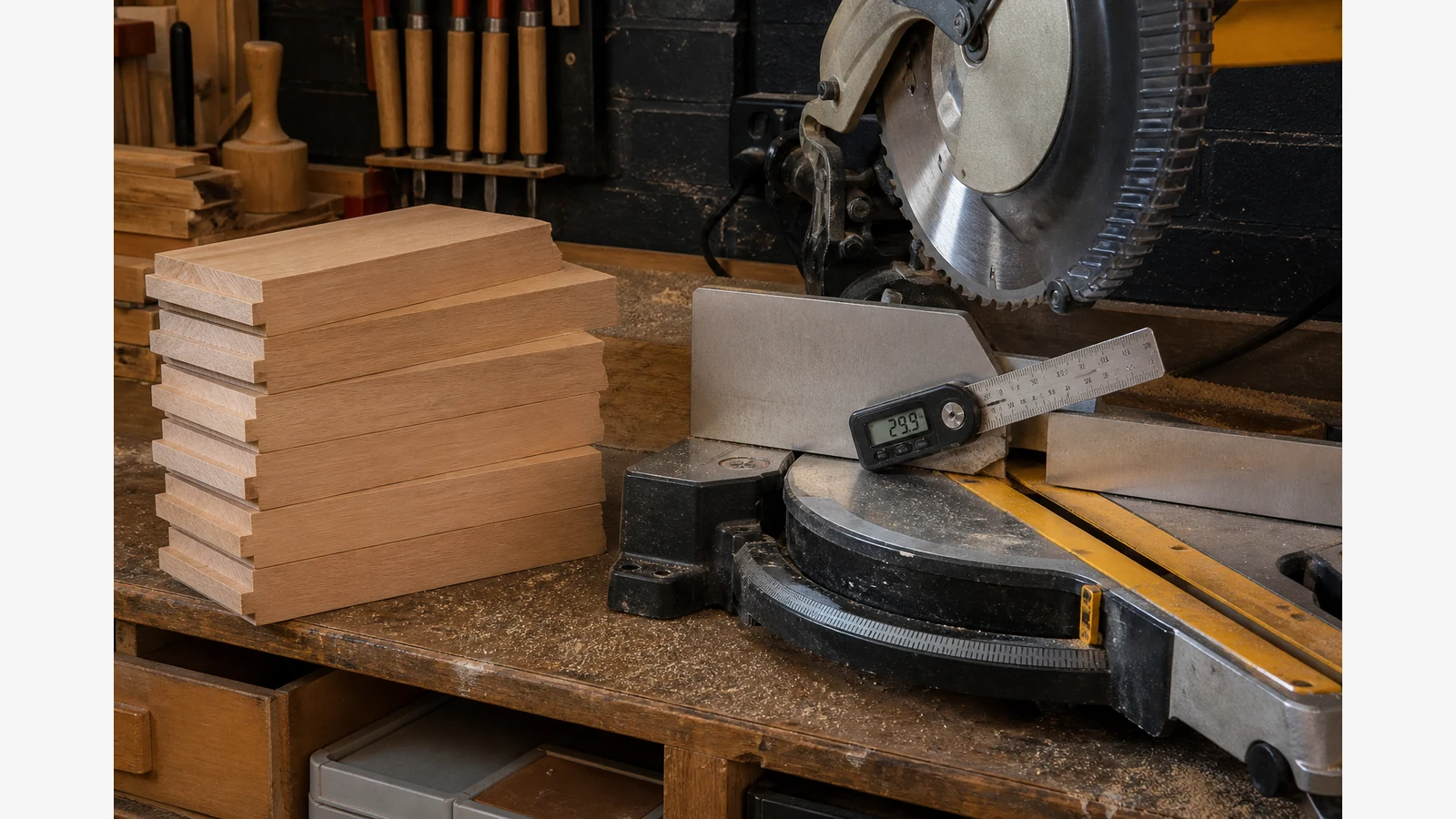
- Friday evening: Mill scrap to finished thickness. Set the saw near 30°, then verify blade-to-fence with a digital angle ruler before cutting a test pair.
- Saturday: Lock a stop block for equal side lengths. Cut all six sides. Label faces so grain flows around the ring.
- Sunday: Dry-fit without glue on a flat bench. Only when every joint closes should you glue and clamp.
Why verify the saw scale
Mitre-saw detents and printed scales drift. Polygon calculators and practical hexagon builds both assume the cutter really is at 30°; a digital check on the blade-to-fence angle catches a detent that is a fraction off before you spoil stock. UK joinery calculators for polygonal frames use the same interior-angle bisect idea for planters and picture frames.
Error control
- Confirm flat geometry — not a splayed planter.
- Zero or lock your digital ruler against the fence and blade path safely with the saw unplugged.
- Adjust until the reading matches your intended 30° setting.
- Cut two scraps and assemble them; a gap means length or angle error — fix before the remaining four.
- Use one stop-block length for all six sides so length errors do not accumulate.
Out of scope: Splayed hexagon planters need compound mitre and bevel settings. Do not apply the flat 30° formula to flared walls.
A hinged digital protractor is enough to confirm the saw landed on the intended setting before glue-up. Next step: keep it beside the saw for the Friday calibration pass.